Running a small business in 2026 means managing more complexity with fewer people than any enterprise competitor. You are simultaneously the CEO, marketing director, accountant, customer service team, and IT department, often all in the same day.
The right software stack changes this. Tools that automate invoicing mean you spend 20 minutes on billing instead of two hours. A CRM that tracks every client interaction means no lead falls through the cracks. Accounting software that connects to your bank means bookkeeping happens automatically rather than in a panic before tax season.
This guide covers the 30 Best Tools for Small Business in 2026, tested across real business workflows, organised by function, and honest about free versus paid options. Every recommendation is based on what actually works for businesses of 1–50 people, not what enterprise software vendors want you to buy.
Table of Contents
How to Build Your Small Business Software Stack
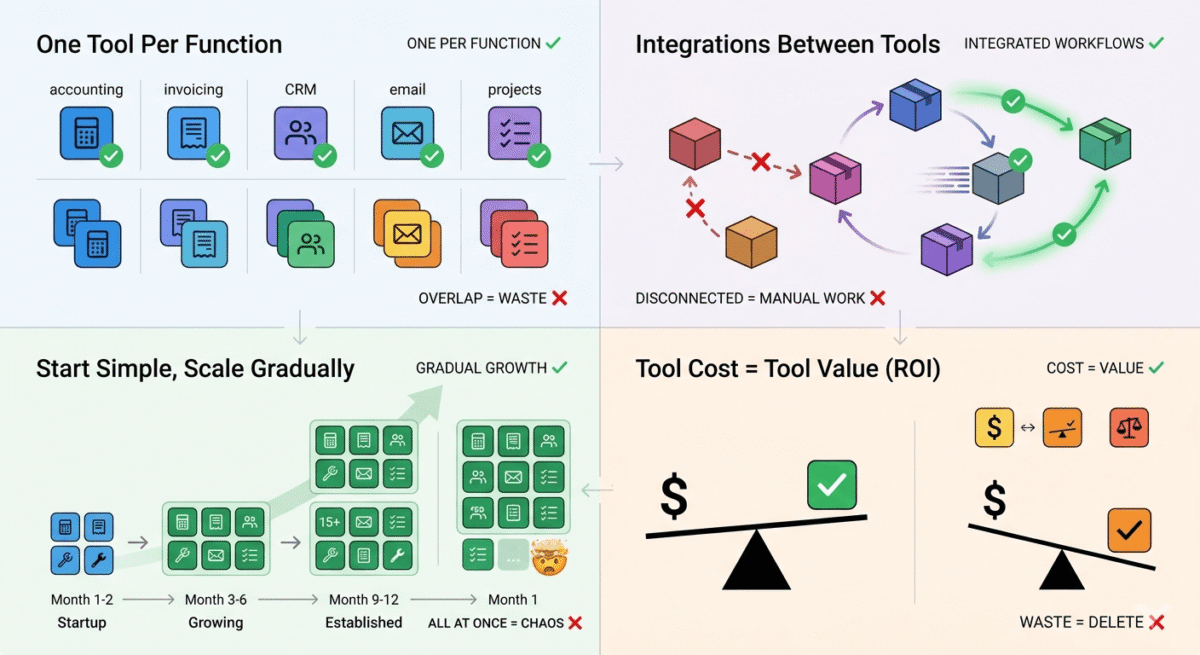
The mistake most small business owners make is adding tools reactively, signing up for whatever solves the immediate problem without thinking about how tools connect, overlap, or conflict.
A well-designed software stack:
- Has one primary tool for each function (no overlap)
- Integrates between tools where data needs to flow (accounting ↔ invoicing ↔ payments)
- Scales with the business (starts simple, adds complexity as needed)
- Does not cost more than the value it creates
Start with the five foundational tools: accounting, invoicing, CRM, email marketing, and project management. Add others only when a specific workflow problem demands it.
Section 1: Financial Management
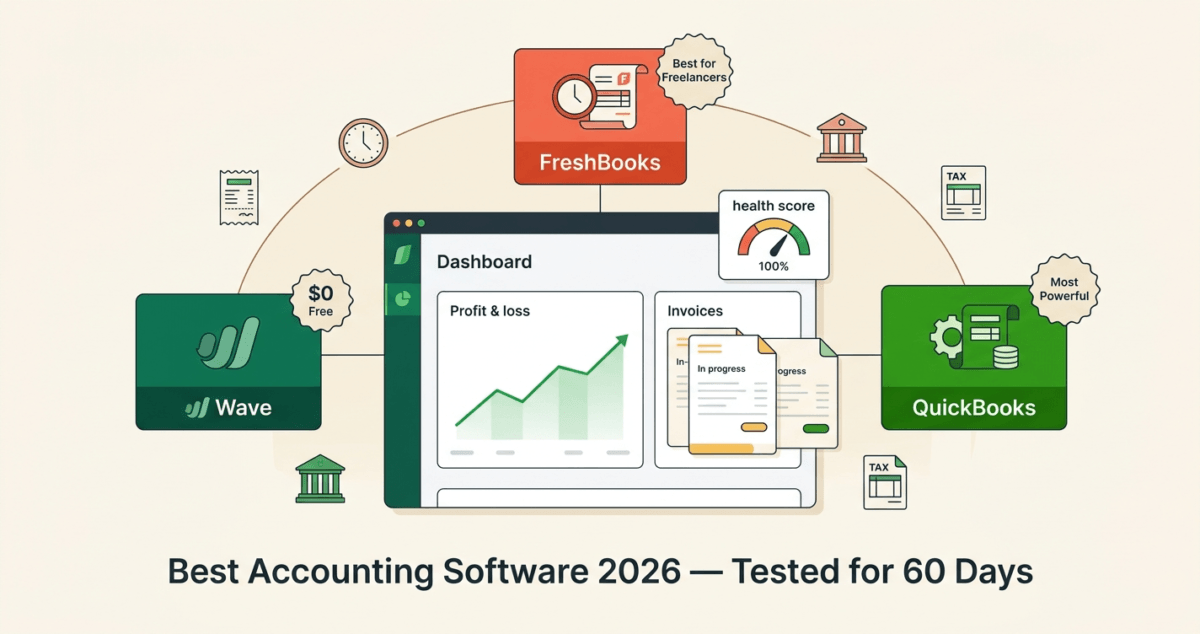
1. QuickBooks Online, Best Accounting Software for Growing Small Businesses
Price: $35/month (Simple Start) | $65/month (Essentials)
Affiliate: Up to $100 per referral
Full review: Best Accounting Software →
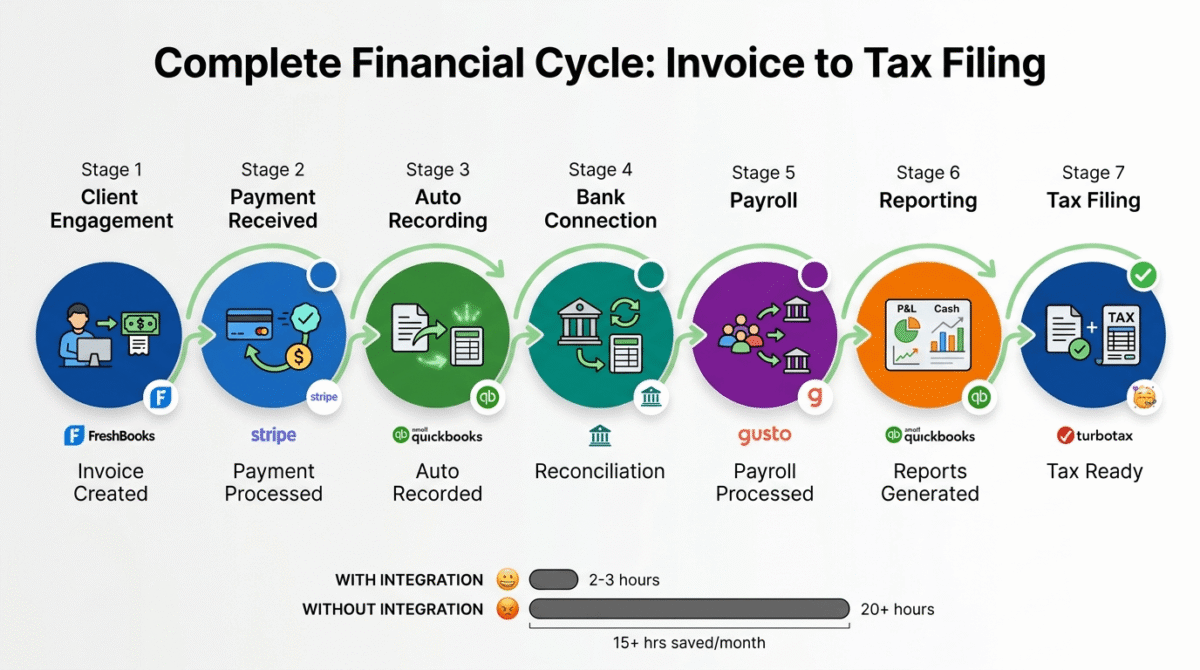
QuickBooks Online is the accounting standard for small businesses, used by more businesses and supported by more accountants than any alternative. If your accountant or bookkeeper works with any software, there is a strong chance they prefer QuickBooks, making collaboration straightforward.
Key capabilities for small businesses:
- Bank connection with AI-assisted transaction categorisation (85% automatic accuracy)
- Profit and loss, balance sheet, and cash flow reports generated automatically
- Tax-category expense tracking, every deductible expense captured correctly
- Payroll add-on integrates directly with accounting for seamless pay run processing
- TurboTax integration exports your business financials directly into your tax return
When to use Wave instead: If your business is genuinely simple, one income stream, minimal expenses, no employees, Wave’s completely free accounting handles everything without the $35–$65/month QuickBooks cost.
2. FreshBooks, Best Invoicing Software for Service Businesses
Price: $19/month (Lite) | $33/month (Plus)
Affiliate: Up to $55 per referral
Full review: Best Invoicing Software →
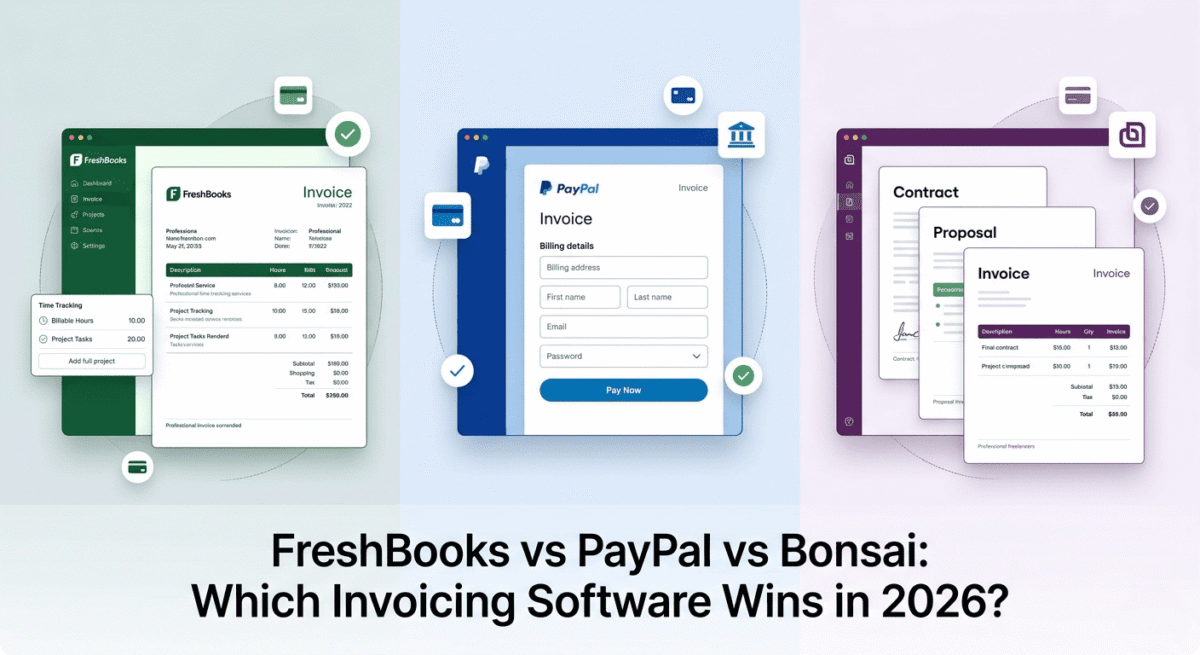
FreshBooks is the best invoicing tool for service businesses that bill clients, professional invoice creation, built-in time tracking that converts hours to invoice line items automatically, recurring invoices for retainer clients, and automatic payment reminders that chase late payments on your behalf.
The client portal, where clients view all invoices, make payments, and see their complete billing history, is the most polished client-facing invoicing experience available. For service businesses where client relationship quality matters, this professional billing experience is worth the monthly fee.
Accept payments via credit card, ACH, and PayPal directly through invoices. Clients pay in one click. Money arrives within 2 business days.
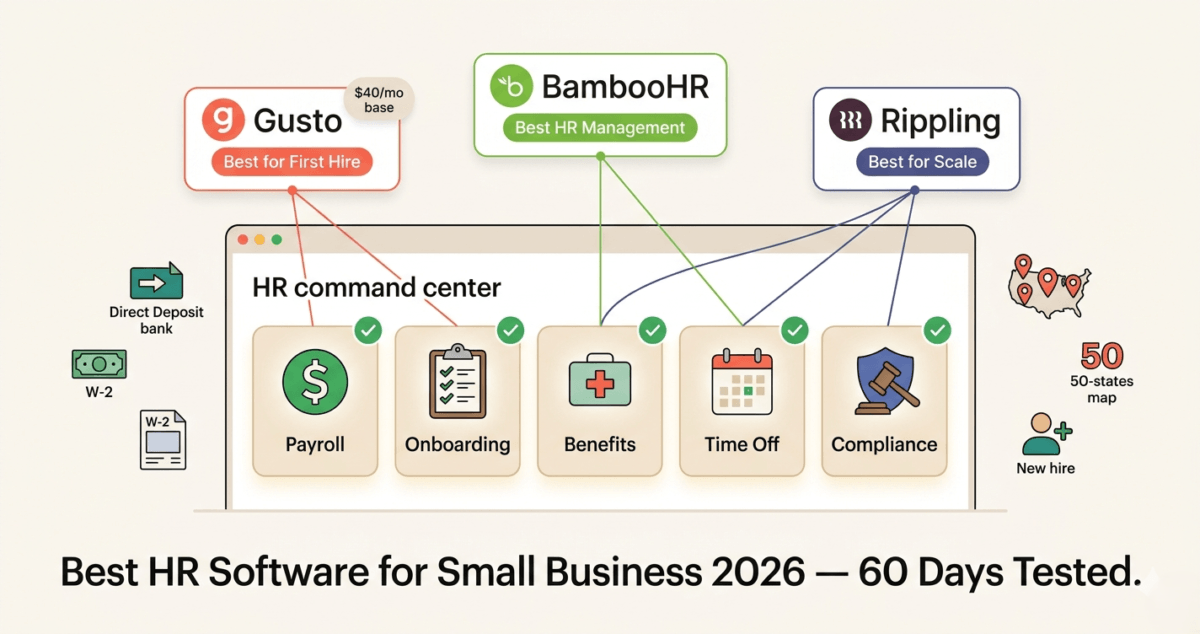
3. Gusto, Best Payroll Software for Small Businesses
Price: $40/month + $6/employee (Simple)
Affiliate: Up to $500 per referral
Full review: Best HR Software →
Running payroll manually is one of the highest-risk activities a small business owner undertakes, payroll tax errors result in IRS penalties, and missing a payroll run damages employee relationships irreparably. Gusto automates the entire process: calculate pay, deduct taxes, process direct deposits, and file federal and state payroll taxes automatically.
For a team of five, Gusto Simple costs $70/month, less than one hour of an accountant’s time, and handles every payroll compliance requirement automatically.
The digital employee onboarding, new hires complete all paperwork (W-4, I-9, direct deposit) online before their first day, eliminates the administrative burden of hiring.
4. Stripe, Best Payment Processing for Small Businesses
Price: 2.9% + $0.30 per transaction (no monthly fee)
No affiliate, recommended because it is genuinely best
Stripe is the payment processor that powers millions of businesses globally, the most developer-friendly, the most internationally capable, and the most reliable payment infrastructure available. For small businesses accepting online payments, Stripe provides:
- Accept credit cards, debit cards, Apple Pay, Google Pay, and bank transfers
- Payment links, shareable URLs that open a checkout page, no website required
- Subscription billing for recurring revenue businesses
- 135+ currency support and payouts to 40+ countries
- Dashboard showing all transactions, disputes, and payouts in one place
Section 2: Customer Management
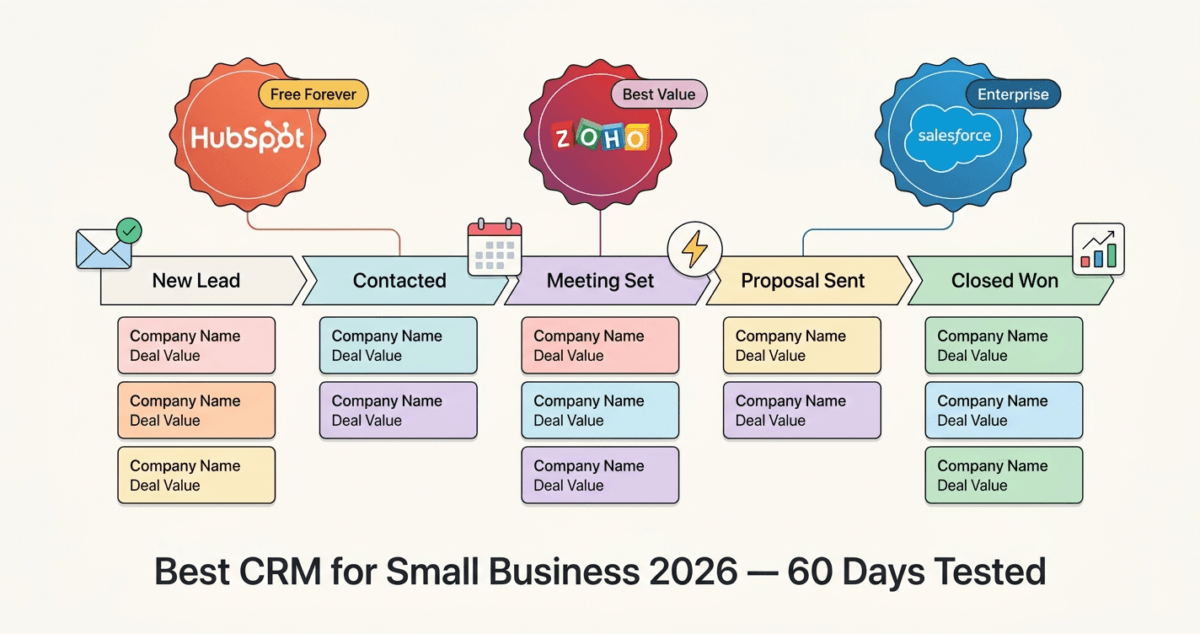
5. HubSpot CRM, Best Free CRM for Small Businesses
Price: Free (unlimited contacts) | $15/seat/month (Starter)
Affiliate: Up to $500 per referral
Full review: Best CRM Software →
HubSpot’s free CRM is the starting point for any small business that wants to stop managing client relationships in a spreadsheet. The visual sales pipeline shows every prospect and where they stand in your sales process, from first contact to closed deal. Email tracking shows when prospects open your proposals, enabling perfectly timed follow-ups.
For small businesses with under 10 team members, HubSpot free covers the essential CRM functions, contact management, deal tracking, email integration, and meeting scheduling, without any cost.
Upgrade to HubSpot Starter ($15/seat/month) when you need email marketing, automated follow-up sequences, and multiple deal pipelines.
6. Tidio, Best Live Chat for Small Business Websites
Price: Free (50 chats/month) | $29/month (Starter)
Affiliate: 30% recurring commission
Full review: Best Live Chat Software →
Every visitor who leaves your website with an unanswered question is a missed sales opportunity. Tidio’s live chat widget captures these conversations, answering pre-purchase questions instantly, qualifying leads automatically, and routing complex inquiries to your team.
The Lyro AI chatbot answers common questions automatically from your FAQ content, reducing the live chat volume requiring human attention by 60–70%. For small businesses without dedicated customer service staff, Lyro handles routine inquiries around the clock while you focus on higher-value work.
The WordPress plugin makes installation a one-click process, Tidio is live on your site within 10 minutes of signup.
7. Intercom, Best Customer Communication Platform for SaaS Small Businesses
Price: $39/month (Essential)
Affiliate: Intercom affiliate program
Full review: Best Live Chat Software →
For software businesses where customer data integration, showing each user’s account status, subscription tier, and usage history alongside their support conversation, is essential, Intercom’s contextual customer communication is worth the premium over Tidio.
Intercom’s Fin AI answers questions from your help centre documentation with 70–80% accuracy, reducing support ticket volume before it reaches human agents. The shared inbox with team assignment enables structured support workflows as your customer base grows.
Section 3: Marketing Tools
8. ConvertKit, Best Email Marketing for Small Businesses and Bloggers
Price: Free (up to 10,000 subscribers) | $25/month (Creator)
Affiliate: 30% recurring for 24 months
Full review: Best Email Marketing Software →
ConvertKit’s free plan, unlimited email sends to up to 10,000 subscribers, is the most generous email marketing free tier available. For small businesses growing their email list, this means building a significant marketing asset without any cost until the list genuinely justifies a paid plan.
The subscriber tagging and segmentation system enables sending targeted emails to exactly the right audience segment, customers who have purchased X, prospects who downloaded Y, subscribers who have not opened in 90 days, without the list-management complexity of traditional email platforms.
9. Semrush, Best SEO and Marketing Intelligence for Small Businesses
Price: $117.33/month (Pro, billed annually)
Affiliate: 40% recurring lifetime commission
Full review: Best SEO Tools →
For small businesses that depend on organic search for customer acquisition, Semrush provides the intelligence to make content and SEO investments that generate measurable returns. The competitive analysis reveals exactly which keywords your competitors rank for, which pages drive their traffic, and which backlinks contribute to their authority.
The ContentShake AI tool generates SEO-optimised content briefs for any target keyword, reducing the research time per blog post from hours to minutes. For small business owners who write their own content without a dedicated marketing team, Semrush’s AI assistance makes SEO-effective content production achievable.
Free alternative: Google Search Console + Ahrefs Webmaster Tools (both free) provide sufficient SEO data for businesses in early growth stages.
10. Later, Best Social Media Scheduling for Small Businesses
Price: Free (limited) | $16.67/month (Starter)
Affiliate: 30% recurring commission
Full review: Best Social Media Scheduling →
Later’s visual content calendar and AI caption generator make consistent social media presence achievable for small business owners who do not have time to post manually every day. Create one week of social content in 30 minutes, paste your content ideas, let AI generate platform-appropriate captions, schedule for optimal posting times, and let Later publish automatically.
The Pinterest scheduling is Later’s most distinctive feature for e-commerce and lifestyle small businesses, native Pinterest scheduling with full pin details drives ongoing traffic from a single content investment.
11. Canva Pro, Best Design Tool for Small Business Marketing
Price: $12.99/month
Affiliate: Up to $36 per Pro signup
Full review: Canva vs Adobe Express →
Canva Pro gives small businesses professional design capability without hiring a designer, social media graphics, email headers, presentation decks, flyers, business cards, and marketing materials all from one tool. The Brand Kit stores your logo, brand colours, and fonts, ensuring every piece of marketing material maintains visual consistency.
The Magic Resize feature, converting one design to all social media platform dimensions simultaneously, saves hours of repetitive reformatting for businesses that market across multiple channels.
12. Unbounce, Best Landing Page Builder for Small Business Campaigns
Price: $74/month (Build)
Affiliate: 20% recurring commission
Full review: Best Landing Page Builders →
Every paid advertising campaign should send traffic to a dedicated landing page, not your homepage. Unbounce’s Smart Traffic AI automatically routes each visitor to the landing page variant most likely to convert them, improving conversion rates by an average of 30% without manual A/B testing.
For small businesses running Google Ads, Facebook Ads, or email campaigns, the conversion improvement from dedicated landing pages versus sending traffic to a homepage typically pays for Unbounce within the first month.
Section 4: Operations and Productivity
13. Monday.com, Best Project Management for Small Business Teams
Price: $9/seat/month (Basic) | $12/seat/month (Standard)
Affiliate: Monday.com affiliate program
Full review: Best Project Management Tools →
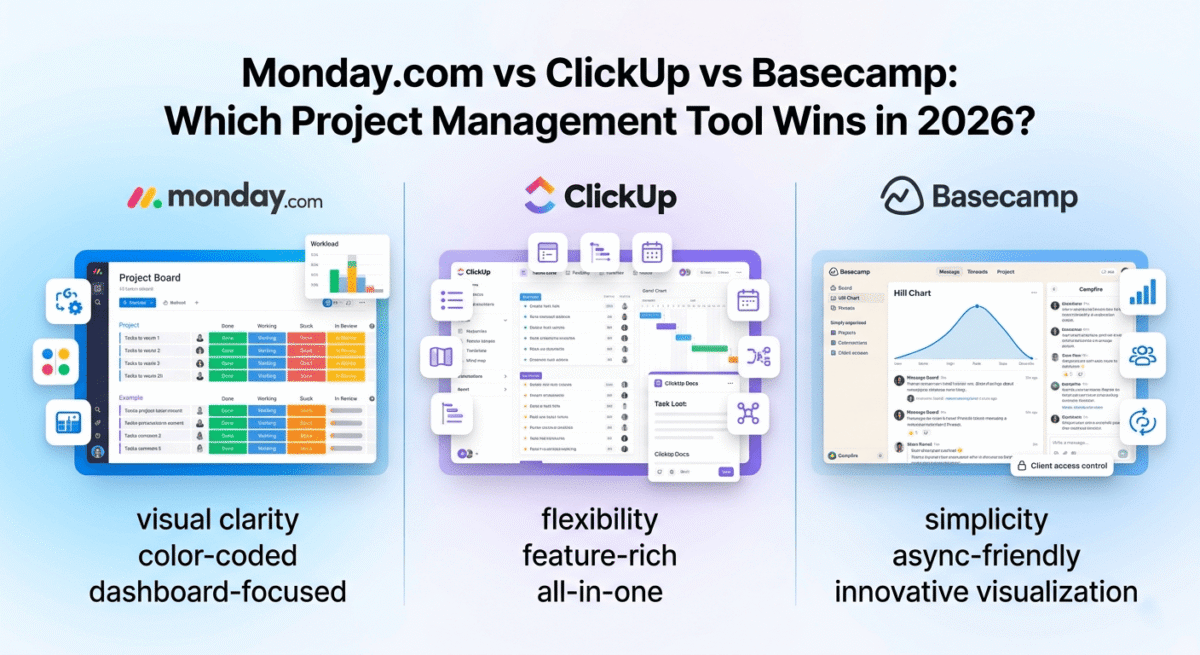
Monday.com’s visual project management, colour-coded status columns, workload views, and cross-project dashboards, gives small business owners visibility into everything their team is working on without scheduling daily check-in meetings. The automation features reduce manual status updates: “when task is marked Done, notify the project manager and move to next stage”, triggered automatically without anyone remembering to do it.
For small businesses managing client projects alongside internal operations, Monday.com’s department-agnostic structure adapts to any workflow without forcing your team into a predefined methodology.
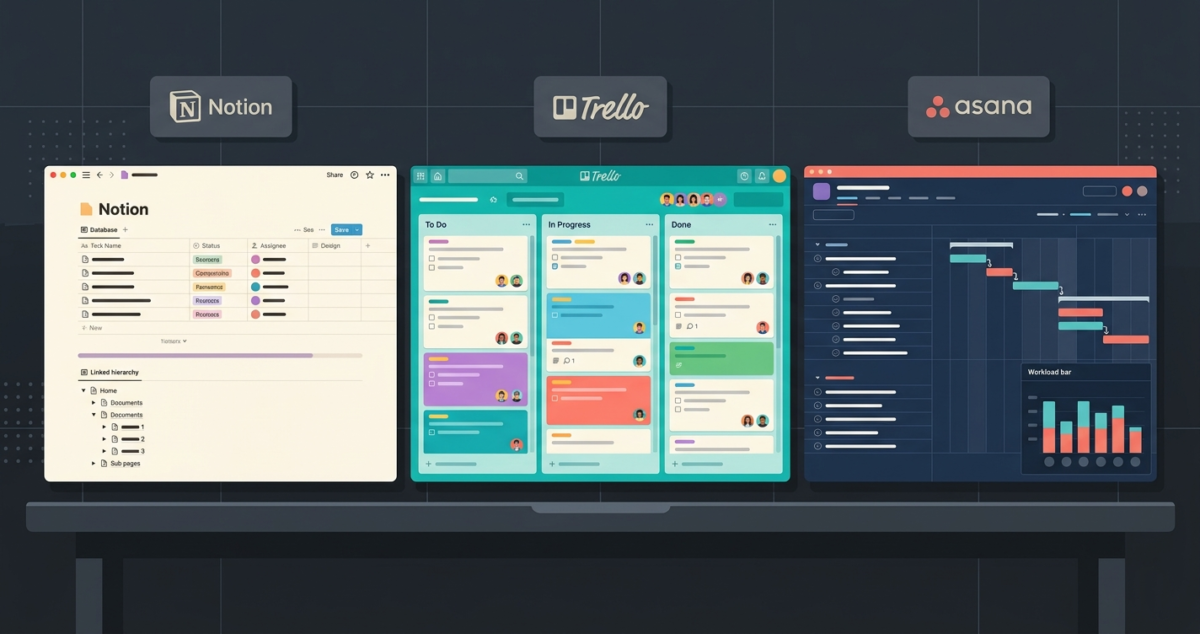
14. Notion, Best Knowledge Base and Documentation for Small Businesses
Price: Free | $10/month (Plus)
Affiliate: Notion affiliate
Full review: Best Note-Taking Apps →
Notion is the best tool for capturing and organising the institutional knowledge that lives in your team’s heads, SOPs, client documentation, onboarding guides, meeting notes, and process documentation. As a small business grows, undocumented knowledge becomes the primary bottleneck, new team members cannot be effective without documented processes.
The database feature enables structured information management that scales: a client database linking to all projects, proposals, and communications for each client; a product database tracking features, pricing, and documentation; a team knowledge base where every process is documented and searchable.
15. Slack, Best Team Communication for Small Businesses with Multiple Team Members
Price: Free (90-day message history) | $7.25/user/month (Pro)
No affiliate, recommended on merit
Slack organises team communication into channels, reducing the email overload that buries important messages in general inboxes. Channels for specific projects, departments, or topics mean communication is contextualised, searchable, and accessible to everyone who needs it.
For remote and hybrid small business teams, Slack provides the watercooler communication that replaces informal office conversations, keeping remote team members connected and reducing the isolation that kills remote team culture.
Free alternative: Discord provides similar channel-based communication completely free, appropriate for small teams comfortable with a less formal interface.
16. Zoom, Best Video Conferencing for Small Business Meetings
Price: Free (40-min group limit) | $13.33/month (Pro)
Affiliate: Zoom affiliate
Full review: Best Video Conferencing Software →
Zoom remains the most reliable video conferencing tool for client-facing meetings, joining requires one link click with no software download required for external participants. For small businesses whose meetings include external clients, partners, or suppliers who should not need to create an account to join, Zoom’s frictionless guest access is worth the paid subscription.
17. Google Workspace, Best Business Email and Collaboration Suite
Price: $6/user/month (Business Starter)
No affiliate, essential tool
Professional email at your own domain (name@yourbusiness.com) is the single most important investment a small business makes in its professional image. Google Workspace at $6/user/month provides: custom domain email via Gmail (familiar interface, powerful spam filtering), Google Drive with 30GB storage per user, Google Meet for video calls, Google Calendar with shared team calendars, and Google Docs for collaborative document creation.
The alternative, using a free Gmail address for business communications, projects unprofessionalism that undermines trust with clients, suppliers, and partners.
Section 5: Human Resources and Team Management
18. BambooHR, Best HR Software for Growing Small Businesses
Price: Custom pricing (~$6–$9/employee/month)
Affiliate: BambooHR affiliate
Full review: Best HR Software →
BambooHR is the best HR management platform for small businesses that have grown beyond basic payroll, the employee record system, performance review cycles, time-off management with approval workflows, and applicant tracking system provide the HR infrastructure that growing teams need.
For businesses with 15+ employees where managing HR manually is becoming a significant time burden, BambooHR provides the structure to make HR management systematic rather than reactive.
19. 1Password Teams, Best Password Management for Small Business Teams
Price: $19.95/month (up to 10 users flat rate)
Affiliate: Up to $60 per referral
Full review: Best Business Password Managers →
Shared passwords are one of the most common small business security vulnerabilities, when employees share login credentials via email or chat, credentials get leaked, reused, and never rotated when employees leave. 1Password Teams stores shared credentials securely, provides access only to team members who need it, and enables instant revocation when someone leaves.
The Teams Starter Pack at $19.95/month for up to 10 users is the best value in business password management for small teams.
20. Wordfence Security, Best Website Security for WordPress Small Businesses
Price: Free | $119/year (Premium)
No affiliate, free recommendation
Full review: Best WordPress Plugins →
For small businesses running WordPress websites, Wordfence provides enterprise-grade security at a fraction of enterprise costs. The web application firewall, malware scanner, and brute force protection catch the automated attacks that target WordPress sites constantly, without requiring a dedicated IT security team to manage.
Section 6: Customer Experience and Sales
21. Shopify, Best E-Commerce Platform for Small Businesses Selling Products
Price: $29/month (Basic)
Affiliate: $150 per merchant referral
Full review: Best E-Commerce Platform →
For small businesses that sell physical or digital products online, Shopify provides the most complete and reliable e-commerce infrastructure, product management, inventory tracking, payment processing, shipping integration, and multi-channel selling (Instagram, Facebook, Amazon, TikTok Shop) from one dashboard.
The managed infrastructure means no server administration, no security patches, and no performance optimisation, Shopify handles all technical aspects so you focus on products and marketing.
22. Leadpages, Best Landing Page Tool for Small Business Lead Generation
Price: $37/month (Standard)
Affiliate: 10–50% recurring commission
Full review: Best Landing Page Builders →
Leadpages is the most affordable professional landing page tool for small businesses, unlimited pages, unlimited traffic, and no conversion caps at $37/month. The template library with conversion rate data for each template means you start with pages that have a proven performance record rather than designing from scratch.
The built-in Stripe checkout enables direct product and service sales from landing pages without a separate e-commerce setup.
23. Calendly, Best Meeting Scheduling for Small Business Sales Teams
Price: Free (1 event type) | $10/month (Standard)
Affiliate: Calendly affiliate
Calendly eliminates the scheduling friction that kills sales momentum, instead of multiple emails to find a meeting time, share a link and prospects book immediately. For small businesses where response speed to inbound leads directly affects conversion rates, Calendly reduces time-to-meeting from days to minutes.
Section 7: Analytics and Intelligence
24. Google Analytics 4, Best Free Analytics for Small Business Websites
Price: Free
Full review: Best Website Analytics →
Google Analytics 4 is non-negotiable for any small business website, it shows where visitors come from, which pages they view, how long they stay, and what actions they take. Without this data, marketing decisions are guesses. With it, you see exactly which channels drive valuable traffic and allocate budget accordingly.
25. Hotjar, Best Customer Behaviour Analytics for Small Businesses
Price: Free (unlimited heatmaps, 35 daily sessions) | $32/month (Plus)
Affiliate: 25% recurring commission
Full review: Best Website Analytics →
Hotjar’s heatmaps show where visitors click, scroll, and spend time on your website, revealing the usability issues and conversion blockers that aggregate traffic data cannot identify. For small businesses whose websites are primary sales channels, understanding why visitors leave without converting is as important as knowing how many arrive.
Section 8: Infrastructure and Security
26. Hostinger, Best Web Hosting for Small Business Websites
Price: $3.99/month (Premium, introductory)
Affiliate: Up to $150 per signup
Full review: Best Web Hosting →
Every small business needs a professional website, and Hostinger provides the fastest, most affordable hosting for WordPress and static business websites. LiteSpeed servers deliver sub-1.5-second page loads that improve both user experience and Google rankings. The beginner-friendly hPanel makes domain management, SSL activation, and WordPress installation straightforward for non-technical business owners.
27. NordVPN Teams, Best VPN for Small Business Remote Teams
Price: $7/user/month (Teams)
Affiliate: 40% + 30% recurring commission
Full review: Best VPN for Beginners →
Remote small business teams frequently work from home networks, co-working spaces, and coffee shops, all vulnerable to interception. NordVPN Teams provides business-grade VPN with centralised management, dedicated IP addresses for business services that require consistent access points, and activity monitoring for compliance.
28. Backblaze Business Backup, Best Cloud Backup for Small Business
Price: $99/computer/year
Affiliate: Up to $25 per referral
Full review: Best Cloud Backup Software →
Small business data, client files, financial records, project work, is the most valuable and most vulnerable asset most businesses own. Backblaze continuously backs up every computer in your business for $99/computer/year, unlimited storage, set-and-forget automatic backup, and physical restore for large data recovery scenarios.
29. Cloudflare, Best Security and Performance for Small Business Websites
Price: Free | $20/month (Pro)
No affiliate, free recommendation
Cloudflare’s free plan provides enterprise-grade DDoS protection, global CDN, and free SSL for any business website, connect your domain to Cloudflare in five minutes and your site is protected and faster worldwide at zero cost.
30. Rank Math SEO, Best SEO Plugin for Small Business WordPress Sites
Price: Free | $59/year (Pro)
Affiliate: Rank Math affiliate
Full review: Best WordPress Plugins →
For small businesses whose websites run on WordPress, Rank Math provides complete SEO management, on-page optimisation analysis, automatic schema markup, sitemap generation, and Google Search Console integration. The free plan covers everything most small business websites need to establish strong search visibility.
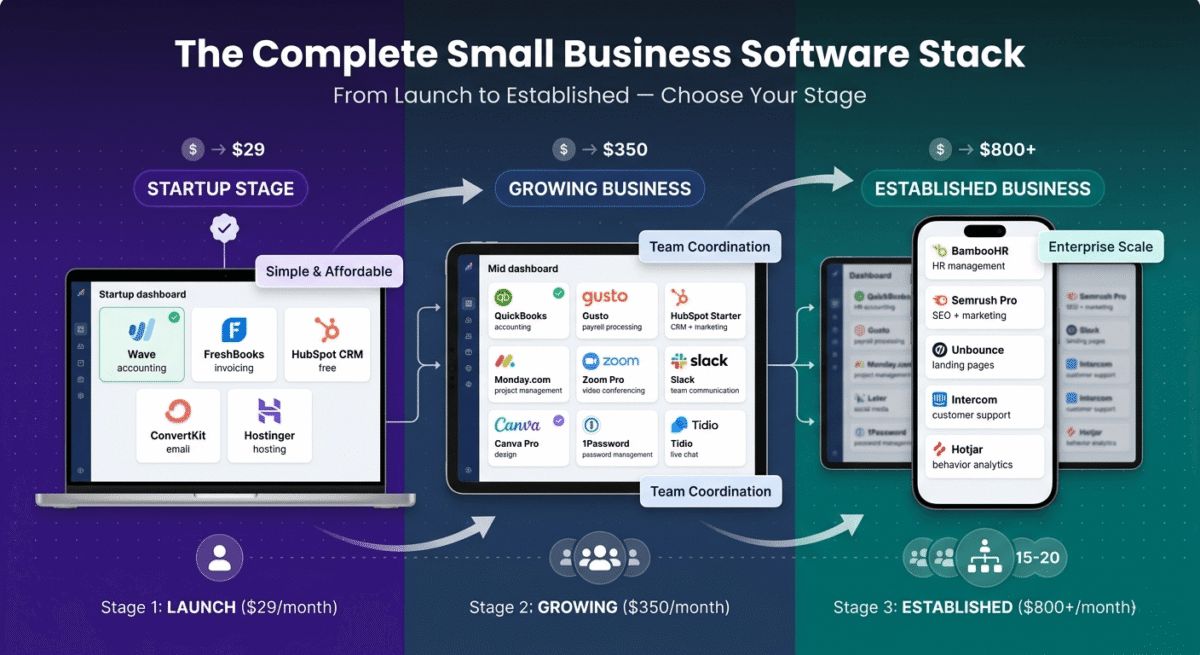
The Recommended Small Business Software Stack by Stage
Stage 1: Launch (0–5 employees, under $10k/month revenue)
Tool | Purpose | Monthly Cost |
Hostinger | Web hosting | $4 |
Google Workspace | Business email + Drive | $6/user |
Wave | Accounting | Free |
FreshBooks Lite | Invoicing | $19 |
HubSpot CRM | Client management | Free |
ConvertKit | Email marketing | Free |
Canva Free | Design | Free |
Wordfence | Website security | Free |
Bitwarden | Password management | Free |
Total (1 employee) | ~$29/month |
Stage 2: Growing (5–20 employees, $10k–$50k/month revenue)
Tool | Purpose | Monthly Cost |
QuickBooks Essentials | Accounting | $65 |
Gusto Simple | Payroll | $70 (5 employees) |
HubSpot Starter | CRM + marketing | $15/seat |
Monday.com Standard | Project management | $12/seat |
Zoom Pro | Video conferencing | $13.33 |
Slack Free | Team communication | Free |
Later Starter | Social media | $16.67 |
Canva Pro | Design | $12.99 |
1Password Teams | Password management | $19.95 |
Tidio Starter | Live chat | $29 |
Total (5-person team) | ~$350/month |
Stage 3: Established (20–50 employees, $50k+/month revenue)
Add to Stage 2 stack:
Tool | Purpose | Monthly Cost |
BambooHR | HR management | ~$150+ |
Semrush Pro | SEO and marketing | $117.33 |
Unbounce Optimize | Landing pages | $109 |
Intercom Essential | Customer support | $39 |
Hotjar Plus | Behaviour analytics | $32 |
Additional monthly | ~$450 |
The One-Page Software Audit for Small Businesses
Before adding any new tool, ask these four questions:
1. What specific problem does this solve? If you cannot describe the problem in one sentence, you do not need the tool.
2. Do you already have a tool that could solve it? Check your existing stack before paying for something new. Most small businesses have underutilised tools before needing new ones.
3. What is the measurable ROI? A $50/month tool needs to save at least $50/month in time or generate at least $50/month in additional revenue to justify the cost.
4. Will your team actually use it? The best tool is the one people use. A free tool everyone uses beats a premium tool nobody opens.
Frequently Asked Questions
What software do small businesses need?
Every small business needs five foundational tools: accounting software (QuickBooks or Wave), invoicing software (FreshBooks or Wave), a CRM for customer management (HubSpot free), email marketing (ConvertKit free), and a website with professional hosting (WordPress on Hostinger). Everything else is added as specific business needs arise.
What is the best all-in-one software for small business?
No single tool handles every small business function well, the “all-in-one” tools that claim to do everything typically do nothing excellently. The best approach is a focused stack where each tool does one job well and integrates with adjacent tools. HubSpot comes closest to all-in-one for marketing, sales, and customer service, but still requires separate accounting and project management tools.
How much should a small business spend on software?
As a general guideline: under $200/month for a 1–5 person business, $200–$500/month for a 5–15 person business, and $500–$1,500/month for a 15–50 person business. Software spending above 3–5% of monthly revenue warrants a cost-benefit audit of each subscription.
What accounting software is best for small business?
QuickBooks Online is the best accounting software for businesses with employees, complex expenses, or accountants who need standard reporting. Wave is the best free accounting software for solo operators and very small businesses with simple finances. FreshBooks is the best invoicing-focused tool for service businesses that bill clients by the hour.
What CRM is best for small business?
HubSpot CRM free is the best starting point, unlimited contacts, unlimited users, and a visual sales pipeline at zero cost. It covers everything most small businesses need until their sales complexity justifies a paid upgrade. Zoho CRM is the best value paid CRM when HubSpot’s free limitations become constraining.
Do small businesses need project management software?
Yes, once you have more than two team members or more than three concurrent projects. Without project management software, tasks get missed, deadlines slip, and team coordination happens through inefficient email chains. Monday.com, ClickUp (free), or Notion handle small business project management at appropriate price points.
What is the best website builder for small business?
WordPress.org (self-hosted) is the best platform for small businesses that want full control, maximum SEO capability, and no platform restrictions on monetization. Wix is the best hosted website builder for small businesses that want minimal technical maintenance. Squarespace is the best for design-forward service businesses where visual aesthetics are primary.